
STEM Play in Creative Home Den Spaces
Many parents looking for STEM play den ideas want simple ways to encourage science, technology, engineering and maths without turning the house into a classroom. The answer lies in choosing furniture and accessories that naturally support hands-on exploration, building, experimenting and creative thinking in a cosy den or playroom setting.
Why Dens Make Perfect STEM Spaces
A den offers a defined, comfortable area where children feel free to investigate without distraction. Low-level seating, storage that keeps resources close to hand, and surfaces for spreading out materials all help curiosity flourish. Pairing the right pieces creates zones for different types of STEM play while keeping the space inviting and homely.
Building and Engineering Zones with Clever Beds
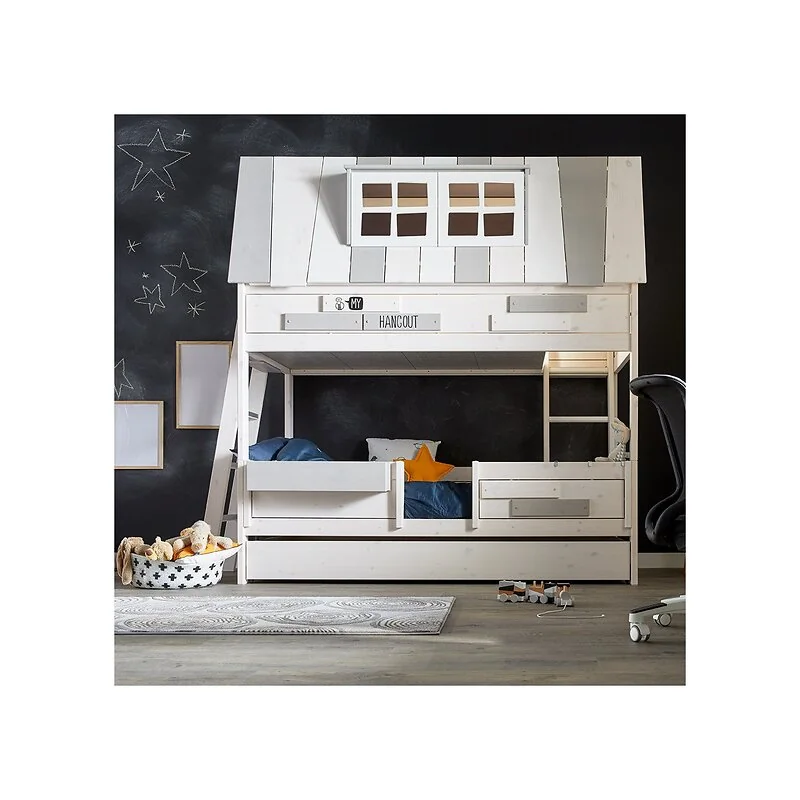
Beds that double as dens provide the perfect base for engineering play. A treehouse-style design with platforms and climbing elements encourages children to test balance, plan routes and solve construction problems. These structures naturally lead to discussions about forces, stability and design.
Pair a Lifetime Adventure Hangout Kids Bed with Treehouse Den with simple building sets and you create an instant engineering corner. Children can build ramps or towers on the platforms, then test them with small cars or balls. The enclosed den area also works well for quiet observation of simple machines or pulleys.
For smaller spaces, staircase beds offer similar benefits. The steps become places to sort, stack and organise materials, supporting early maths concepts such as counting, sequencing and pattern-making.
Work Surfaces and Seating for Science Experiments
A sturdy, child-height table and chairs set forms the heart of many successful STEM dens. Children need a flat, stable surface for mixing, measuring, drawing diagrams or building circuits. Look for designs that are easy to wipe clean and sized for multiple children to work together.
Kids tables and chairs in simple, modern styles fit neatly into playroom corners and encourage collaboration. Pair them with a rotating bookshelf that keeps reference books, experiment cards and notebooks within easy reach. The Living & Home Kids' House Frame Rotating Bookshelf adds a playful house shape while providing storage that children can spin to find what they need.
Comfortable Seating for Focused Thinking
Not all STEM activities happen at a table. Sometimes children need to sit back and observe, read or plan their next experiment. Beanbags and flexible seating allow them to change position comfortably during longer projects.
Kids beanbags are ideal for curling up with a science book or watching a simple demonstration. For something more structured, a Montessori-style play sofa offers firm support and can be rearranged to create different zones within the den. The Tutti Bambini Playrama Montessori Kids Play Sofa - Mushroom brings a soft, colourful element that works beautifully in creative playrooms.
Storage Solutions that Support Organisation and Maths
Good storage is essential for STEM play. Children learn sorting, categorising and inventory skills when they have accessible places for different types of resources. Clear containers, labelled drawers and open shelving all help them find what they need and put things away logically.
Combine a versatile storage cabinet with open cube units so children can see their collections of magnets, measuring tools or building blocks. This visibility encourages independent play and helps them plan which materials they need for a particular activity.
Role Play Pieces that Introduce Real-World STEM
Many children first explore science and technology through pretend play. A wooden hospital set, for example, introduces ideas about measurement, observation and problem-solving in a familiar context.
The Kids Concept Aiden Wooden Hospital Play Set pairs beautifully with a small table and chairs, allowing children to weigh, measure and record information just like real medical professionals. Add a dressing-up element such as the Kids Miffy Disguise & Accessory and the learning becomes even more immersive.
Creating Different STEM Zones in One Den
A well-planned playroom can contain several mini zones without feeling cluttered. Use rugs or room dividers made from fabric draped over a simple frame to separate areas. One corner might focus on building and engineering with the bed as the centrepiece. Another could be a science investigation station with a wipe-clean table, good lighting and nearby storage. A reading nook with comfortable seating and the rotating bookshelf completes the space.
Themed bedrooms can also support STEM thinking. A jungle or safari theme, for instance, naturally leads to discussions about animals, habitats, weather and simple biology. Jungle Safari Themed Kids Bedrooms provide plenty of inspiration for creating an environment where curiosity about the natural world thrives.
Encouraging Independent Exploration
The best STEM dens give children ownership. Keep frequently used items at child height. Provide open-ended materials such as blocks, measuring tapes, magnets, mirrors and simple tools. Rotate resources every few weeks to maintain interest without overwhelming the space.
Observe what your child gravitates towards and add complementary pieces. A child who enjoys building might benefit from extra platforms or a different style of bed, while a budding scientist may need more surface area and storage for specimens and notes.
Look at the wider kids bedrooms and kids furniture ranges for flexible pieces that grow with your child. Modular designs and neutral colours work particularly well because they can be adapted as interests change.
With thoughtful furniture choices and a few well-selected accessories, even the smallest den or playroom corner can become a hub of scientific discovery, creative engineering and mathematical thinking. The space will evolve naturally as your child grows, supporting years of curious play.