
Decluttering Toys Without Tears: A UK Parent’s Guide
Toy overload sneaks up on every parent. One minute the living room looks tidy, the next it resembles a jumble sale. Many UK families reach the same point each year and wonder how to reduce the piles without upset. The good news is that gentle, practical methods exist that involve children in the process and turn decluttering into a positive habit.
Why decluttering toys matters
Too many toys can overwhelm children and make it harder for them to focus or tidy up. Clearing space often leads to children actually playing more with the toys they truly enjoy. It also creates calmer bedrooms and play areas, which many parents notice improves bedtime routines and general household peace.
Involving children from an early age teaches them about choice, responsibility and the idea that making room for new experiences can be a good thing. These are useful life skills that go far beyond the playroom.
Getting started without the tears
Choose a time when everyone is rested and fed. A rainy Saturday morning with snacks at the ready often works well. Explain that you are making space for the toys they love most rather than throwing things away. Framing it positively helps children feel in control.
Sort toys into three simple piles: keep, donate and maybe. The maybe pile can live in a labelled box out of sight for a month. If nothing is asked for, it is usually safe to pass on. This reduces pressure and prevents instant regret.
Involve children in decisions
Ask open questions such as “Which toys make you smile when you play with them?” or “Which ones could another child enjoy as much as you did?” Most children are surprisingly generous once they understand their toys could bring happiness elsewhere.
For younger ones, limit choices to two or three items at a time. Older children can manage bigger categories such as all the cars or all the dressing-up clothes.
Practical sorting methods that work
Work by category rather than by room. Gather every soft toy in one place, every puzzle in another. Seeing the full collection often makes it easier to spot duplicates and items no longer played with.
- Rotate toys: pack some away and bring them out again in a few months. They feel new and the playroom stays manageable.
- Use the one-in-one-out rule for new gifts and party bag surprises.
- Check condition together. Broken items can be mended or responsibly recycled.
Many families find that linking decluttering to seasons helps. Before the new school year or in the quiet weeks after Christmas are popular times for a refresh.
Teaching children to let go
Letting go is a skill. Talk about where the toys will go: a local charity shop, a refuge, or a younger cousin. Some families write a short note together to include with donated toys, which makes the process feel kind rather than sad.
Celebrate the space you create. A clear corner becomes a reading nook or the perfect spot for a new toy storage solution that keeps everything tidy and visible.
Books, in particular, are worth keeping in larger numbers. A low bookcase filled with well-loved stories encourages independent reading. The Mathy By Bols Madaket Low Children’s Bookcase offers open shelving that makes choosing a book easy for little hands.
Creating storage that encourages tidying
Once the piles are smaller, good storage stops clutter returning. Open baskets, labelled bins and low shelves work better than deep boxes with lids that hide everything.
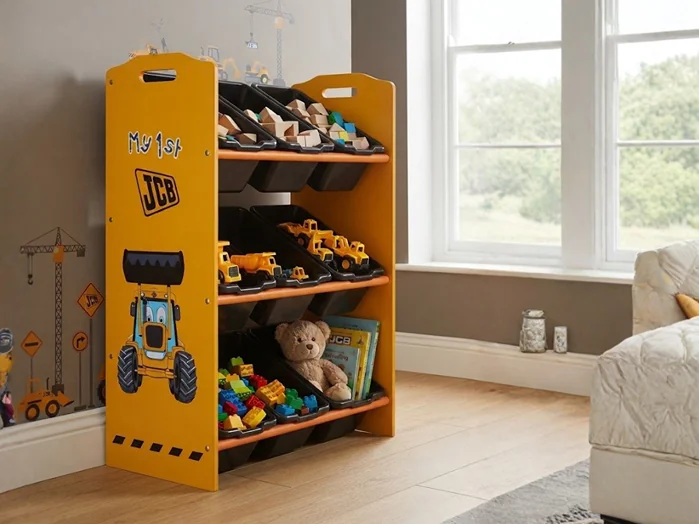
A bright, sturdy organiser like the Kidsaw JCB 9 Bin Kids Toy Storage Organiser Yellow turns tidying into a game for construction-mad children. For softer spaces, a cosy Living & Home Cotton Rope Basket keeps blankets and larger soft toys corralled.
Consider furniture that works twice. Many storage beds provide generous drawers or ottoman space that swallows away seasonal toys without taking extra floor room.
Handling gifts and special toys
Grandparents and relatives often enjoy giving toys. A polite conversation about experiences or books instead can help, but when gifts do arrive, the rotation system mentioned earlier keeps things balanced.
Special toys with sentimental value deserve their own small memory box. One or two favourites can live on a shelf as display items rather than everyday playthings.
For children who love vehicles, the toy cars and construction section has sturdy wooden options that last for years and often hold more long-term appeal than plastic alternatives.
Making decluttering a regular habit
A quick five-minute tidy together at the end of each day prevents big build-ups. Once a term, spend an hour as a family reviewing what still sparks joy. Children who grow up with this rhythm find it normal rather than upsetting.
The goal is not a minimalist home but a home where children can find what they need, play freely and learn that possessions do not define them. Many parents report that after the first successful declutter, children start suggesting items to pass on themselves.
If you would like to refresh the bedroom alongside the toy collection, explore the range of kids furniture and kids beds that combine sleep and storage beautifully. A mid-sleeper cabin bed with storage can transform a cluttered room into an organised, imaginative space children are proud to keep tidy.
Decluttering toys does not need to be stressful. With patience, clear explanations and the right storage, it becomes a shared activity that leaves everyone with more room to play, rest and grow.