
Dealing with Toy Guilt When Decluttering as a UK Parent
Most UK parents know the feeling. You open the toy box, spot that battered wooden train your toddler once loved, and suddenly you’re frozen with guilt. The question is simple: how do you declutter toys without feeling you’re throwing away memories? The good news is there are practical ways to work through the emotion and make decisions you won’t regret.
Why toy guilt hits so hard
Toy guilt often comes from love, not logic. Each battered bear or plastic dinosaur carries stories of first birthdays, rainy afternoons and grandparents’ visits. As parents we worry that letting something go means we’re erasing those moments or somehow failing to value the past. Recognising this feeling as normal is the first step. It doesn’t make you sentimental or wasteful; it makes you human.
A decision-making framework that actually works
Instead of asking “Do I feel bad about getting rid of this?”, try a clearer set of questions. Has the toy been played with in the last year? Does it spark joy for your child now, or only for you? Is it safe, complete and in good condition? If the answer to most of these is no, it may be time to move it on.
Many parents find it helpful to sort into four piles: Keep, Pass On, Recycle and Bin. The Keep pile should be small and meaningful. Choose one or two special items per age stage and store them properly rather than letting everything pile up.
Handling gifts and hand-me-downs
Gifts from family can feel especially loaded. A grandparent’s knitted doll or a wooden set carries extra emotional weight. Remind yourself that the giver wanted to bring happiness, not create permanent clutter. Taking a photo of the item with a note about who gave it can preserve the memory without keeping the object forever.
Practical ways to let go without regret
Start small. Pick one drawer or one category of toys rather than attempting the whole playroom in one go. Set a timer for twenty minutes so the task feels manageable. Many parents discover that once they begin, momentum builds and the guilt fades.
Consider passing toys to friends, nurseries or charity shops. Knowing another child will enjoy them can ease the emotional load. For wooden toys in good condition, look at local playgroups or sell them on through parent networks. The Toys and Gifts section has plenty of ideas for replacements that will suit the next stage of play.
Creating storage that reduces future guilt
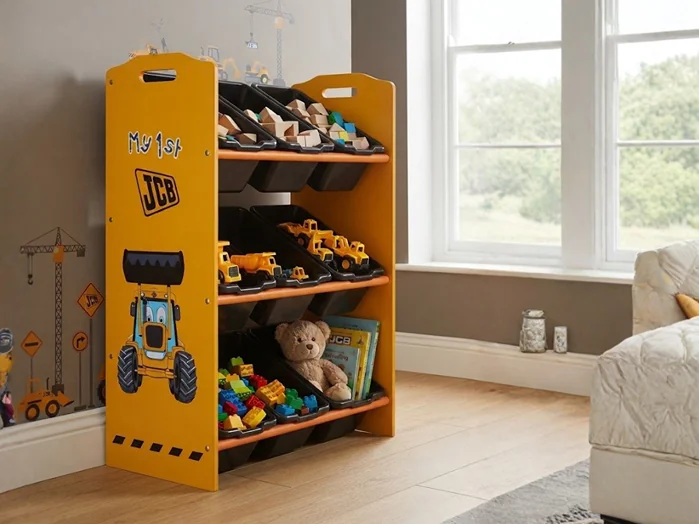
Good storage makes it easier to rotate toys and keep only what’s currently loved. Open shelving, labelled bins and clever furniture all help. When everything has a place, you can see what’s being used and what’s simply gathering dust.
Our toy storage collection includes practical solutions that grow with your child. The Kidsaw JCB 9 Bin Kids Toy Storage Organiser Yellow is popular with little builders who like to tidy their own things away. For smaller items, the Living & Home Cotton Rope Basket offers a soft, attractive option that fits neatly in bedrooms or play spaces.
Replacing old toys with purpose
Once you’ve cleared space, think about what your child actually plays with now. Wooden toys tend to last longer and offer more open-ended play than plastic equivalents. The Wooden Toys range includes classic options that encourage imagination without adding to clutter.
For hands-on learning, the Kids Concept Edvin Wooden Activity Hammer Bench Toy is a sturdy favourite that teaches cause and effect while being compact enough to store neatly. Similarly, the Kids Concept Aiden Wooden Hospital Play Set supports imaginative play and packs away into a small space.
Turning decluttering into a family habit
Involve your children where appropriate. Even young ones can help choose which toys they’ve outgrown. Frame the conversation positively: “Which toys might another child love as much as you did?” This teaches generosity and decision-making early on.
As children grow, their interests change quickly. What felt essential at age three may sit untouched by five. Regular, gentle clear-outs prevent the mountain of toys from becoming overwhelming. Pairing decluttering days with a trip to choose one new special item from the Top Trending Kids Gifts can make the process feel balanced rather than purely loss-focused.
When to seek extra support
If the thought of sorting toys leaves you overwhelmed or anxious, you’re not alone. Many parents find the process stirs up bigger feelings about time passing or family changes. In these cases, talking to friends who’ve been through the same stage or simply giving yourself permission to keep a small memory box can help.
Remember that creating a calmer home helps everyone. A playroom with space to move, build and imagine is far more valuable than one stuffed with unused items. The Kids Furniture and Kids sections offer plenty of inspiring pieces that support both storage and play without adding to future guilt.
Decluttering toys doesn’t mean you love your children less or forget their early years. It means you’re making room for new memories while keeping the most important ones close. Take it at your own pace, be kind to yourself, and trust that the decisions you make with thought and care will serve your family well.