
Creating a Safe Nursery: UK Official Guidance
Preparing a nursery for a new baby brings plenty of excitement and a few important decisions. Many UK parents wonder exactly what makes a room safe, from cot placement to changing table height and general layout. This practical checklist brings together official UK guidance from The Lullaby Trust and RoSPA so you can focus on the essentials without guesswork.
Why nursery safety matters from day one
A well-planned nursery reduces everyday risks and gives everyone peace of mind. Official sources stress that simple, consistent habits around sleep, changing and storage make the biggest difference. The Lullaby Trust offers clear safe sleep advice, while RoSPA provides practical home safety tips that apply directly to nurseries. Following these keeps the focus on enjoying those early months.
Safe sleep setup for your cot or crib
Place the cot away from windows, heaters, cords and hanging decorations. The mattress should be firm, flat and fit snugly with no gaps. Keep the sleep space clear – no pillows, duvets, bumpers or toys. The Lullaby Trust recommends room-sharing for the first six months and always putting babies on their back to sleep.
Once your little one moves to a toddler bed, choose models with safety rails and check that any conversion kits meet current standards. For details on suitable options see our range of Kids Beds.
Common cot safety mistakes to avoid
- Using anything soft or loose in the cot
- Positioning the cot against a radiator or near blinds with cords
- Adding extra blankets instead of a well-fitted sleeping bag
Choosing and positioning a changing table or unit
A dedicated changing station at a comfortable height helps prevent back strain and keeps everything within easy reach. Never leave a baby unattended on any raised surface. Many parents opt for a chest of drawers with a removable changing top that can be taken away later, making the furniture useful for years.
Our Baby Changing Units collection includes practical designs that grow with your child. A firm favourite is the Mathy By Bols Madaket Nursery Dresser with Changing Table, which offers storage below and a safe changing surface that can be removed when no longer needed.
Always keep wipes, creams and spare clothes on the unit but store nappy sacks, lotions and any small items out of baby’s reach in a drawer or on a high shelf.
Nursery layout and general room safety
Think about traffic flow and clear floor space. Position the cot, changing unit and any storage so you can move easily at night. Keep blind cords and curtain pulls well out of reach – RoSPA advises using cord tidies or choosing cordless options.
Electrical sockets should have safety covers. Floor lamps and free-standing heaters are best avoided in small nurseries. A simple night light plugged low on the wall provides gentle illumination without trailing wires.
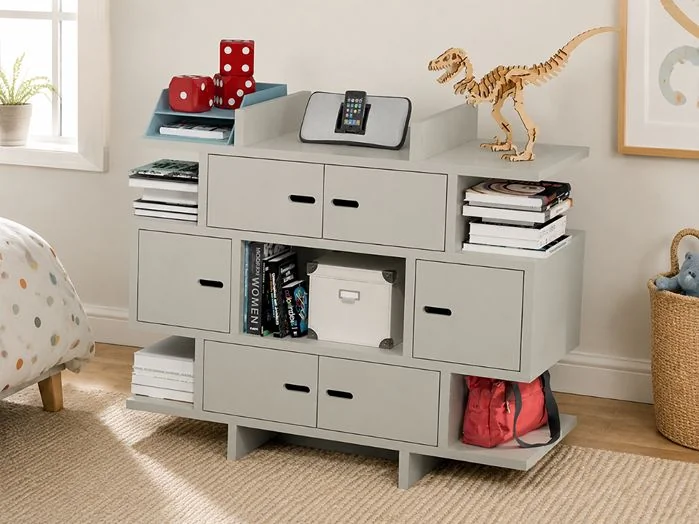
Bookshelves and toy storage should be fixed securely to the wall. Our Nursery Room Accessories include practical pieces that help keep things tidy and safe. A low bookcase such as the Mathy By Bols Madaket Low Children’s Bookcase allows little ones to reach books independently once they start crawling, without the risk of toppling furniture.
Storage solutions that stay safe as baby grows
Chests of drawers and wardrobes must be anchored. Changing units with built-in storage reduce the need for extra furniture and keep surfaces clear. Look for designs where the changing board can be removed so the piece continues as a regular chest.
The Mathy By Bols Madavin 3 Drawer Chest with Changing Station is a good example of furniture that works from newborn days through to the toddler years. For more ideas browse our full Nursery Furniture selection.
Handy storage checklist
- Secure all tall furniture to the wall
- Store small objects and plastic bags in locked or high cupboards
- Use soft-close drawers where possible
- Keep a clear path between cot and changing area
Lighting, temperature and ventilation
Keep the room at a comfortable temperature – The Lullaby Trust suggests around 16–20 °C for sleeping babies. Blackout blinds help with daytime naps while a simple thermometer on the wall lets you check conditions quickly.
Choose ceiling or wall lights rather than table lamps that could be pulled over. A dimmable overhead light or wall sconce with a safety guard works well. Avoid placing any nursery furniture directly under light fittings or ceiling fans.
Moving on from the nursery
As children grow, many families convert the nursery into a toddler or big-kid bedroom. Safety standards remain important – top bunks are generally not recommended for children under 6 according to BS EN 747 guidance. Sturdy single beds with low frames or daybeds make smoother transitions.
Our Kids Furniture range includes practical next-step pieces such as Children's Daybeds that offer flexible sleeping and play space. A bedside cabinet like the Mathy By Bols Madavin Children’s Bedside Table keeps bedtime stories and a lamp safely within reach.
Planning ahead means choosing nursery furniture that can adapt rather than needing full replacement. Many of the pieces in our Nursery category are designed with exactly this in mind.
Every nursery will look different, but the core safety principles stay the same. Take time to check the room from your baby’s eye level, secure what needs fixing, and keep surfaces clear. For the latest official advice always refer directly to The Lullaby Trust and RoSPA websites. With a few sensible choices you can create a nursery that is both safe and welcoming for the years ahead.