
Childproofing Bedroom Windows and Cords
Window falls and dangling blind cords pose real risks in children's bedrooms. The good news is that straightforward measures, in line with UK guidance, can reduce these hazards without turning your home into a fortress. This guide outlines practical steps for securing windows and managing cords in kids' rooms.
Why window and cord safety matters in children's bedrooms
Young children are naturally curious and often lack awareness of danger. A fall from even a low window can cause serious injury, while blind cords that form loops have been linked to strangulation incidents. UK parents and grandparents can take simple actions to create safer bedrooms, whether for toddlers exploring their first big bed or older children who spend more time unsupervised.
Official UK sources such as RoSPA provide clear advice on home safety. Following general principles from these organisations helps keep rooms both functional and secure.
Securing windows against falls
Windows in children's bedrooms should limit how far they can open. Many modern windows come with built-in restrictors, but older ones often need retrofitting. Fit restrictors that allow ventilation while preventing a gap large enough for a child to climb through. Always test them regularly to ensure they remain secure.
Keep furniture such as chests of drawers, toy boxes and beds away from windows. Children can use these as steps to reach the sill. Rearranging the room layout is often the simplest first step.
Choosing the right bedroom layout
When planning a child's bedroom, position the bed against a wall without a window if possible. This reduces temptation to climb near glass. For rooms with limited options, secure any nearby storage furniture to the wall using brackets. A well-thought-out layout also makes the room feel calmer and easier to keep tidy.
Explore practical options in our Kids Furniture collection to find pieces that work well in safer layouts.
Managing blind cords and curtain ties
Dangling cords are a hidden danger. The safest approach is to choose cordless blinds wherever possible. If you already have corded blinds, use cleats or cord tidies to wrap and secure them well out of reach. Tensioned blinds that don't require cords are another practical choice for children's rooms.
Curtains with tie-backs should also be fixed high or replaced with simple pull-down styles. In rooms used by babies and toddlers, removing loose cords entirely is the most effective solution.
Safety considerations for different ages
Babies and toddlers need the strictest measures. Cot beds should be placed away from windows and cords. As children move into big beds, the focus shifts to preventing climbing and ensuring windows cannot open wide.
School-age children still benefit from secure windows, especially on upper floors. Teach them about window safety as they grow, but never rely on supervision alone. For bunk beds, remember that top bunks are generally not recommended for children under 6, in line with common UK guidance such as BS EN 747.
Our Kids' Bunk Beds category includes designs that meet current safety standards.
Additional bedroom safety features
Beyond windows and cords, consider other elements that contribute to a safer room. Choose furniture with rounded edges and secure any freestanding pieces to walls. Good storage helps reduce trip hazards from toys scattered on the floor.
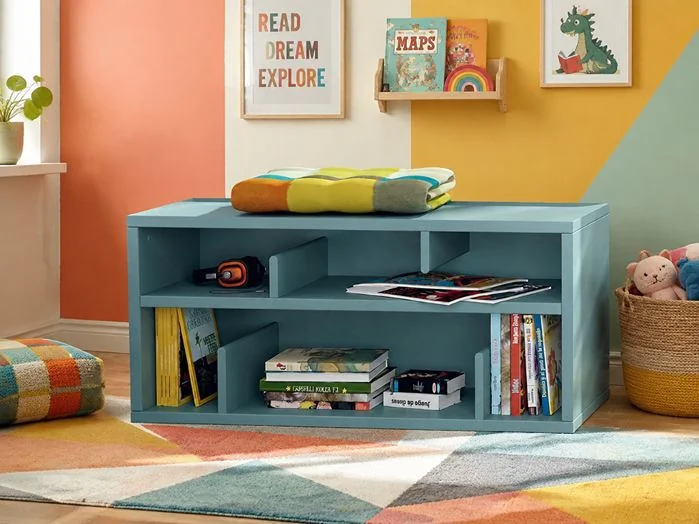
Bedside tables and bookcases should be stable. A low bookcase that a child can reach safely is far better than tall furniture that could topple. Wall art and accessories can be fixed securely rather than left freestanding.
Take a look at the VOX Kids Bedroom Furniture range for sturdy, child-friendly designs, or the Mathy By Bols Madaket Low Children’s Bookcase which offers practical storage at a safe height.
Creating a safe yet fun bedroom environment
Safety does not mean stripping personality from a child's room. Themed beds, cosy reading corners and colourful accessories can all be incorporated once the main hazards are addressed. Families combine secure window treatments with fun elements that encourage imaginative play.
For younger children, a compact chair or rocking seat placed away from windows creates a safe spot for stories. Options like the Kidsaw Gruffalo Children’s Mini Armchair or the Tutti Bambini Jonah Mini Me Children's Rocking Chair - Boucle Mushroom add charm without compromising safety.
Older children might enjoy a mid-sleeper or cabin bed with integrated storage that keeps the floor clear. The Kids Avenue Estella Mid Sleeper Cabin Bed with Desk and Storage is one example of a design that supports both safety and everyday use.
Regular checks and ongoing habits
Childproofing is not a one-time task. Make it a habit to check window restrictors, cord tidies and furniture stability every few months. As children grow and their abilities change, your safety measures may need adjusting. What works for a toddler might need updating when they reach school age.
Combine practical fixes with gentle education. Show older children how to open windows safely and explain why cords must stay secured. This approach helps them develop good habits while you maintain the physical safeguards.
For more ideas on creating practical and safe bedrooms, browse our Kids Bedroom Accessories or the wider Kids' Bedrooms collection.
By addressing windows and cords early, you give children a bedroom where they can play, rest and grow with fewer risks. Small changes today can prevent accidents tomorrow, letting families focus on the fun parts of raising children.